

Day 1 Discussion
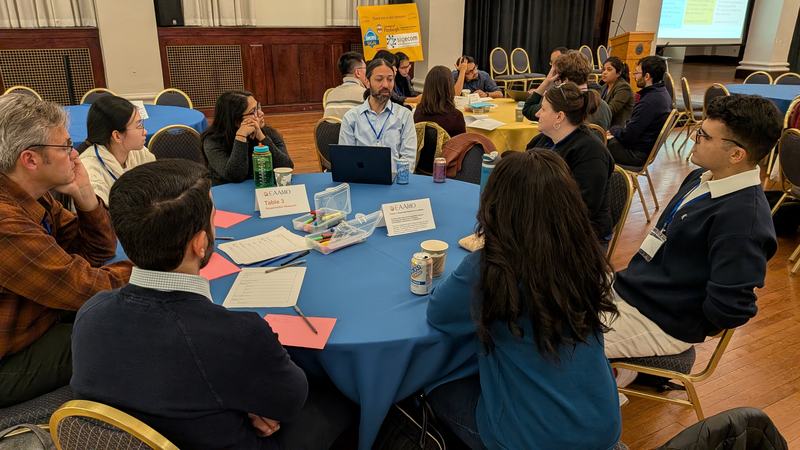
The conversation in the first day of the makerspace makes clear that the question in responsible research is: responsible to whom? Core principles commonly associated with responsible research—such as integrity, transparency, engagement, and accountability—are primarily oriented toward cultivating trust in the research enterprise. This trust can include confidence that data, methodologies, and algorithms are accurate; that findings are reproducible; that affected stakeholders are meaningfully involved in the research process; and that mechanisms exist for oversight and remediation should errors or ethical breaches occur. These assurances are primarily oriented towards gaining the trust of consumers of research (e.g., policymakers, funders, academic peers).
When research involves community partners, these principles may be interpreted differently as the locus of responsibility shifts toward those being researched. Integrity may mean the willingness to represent community realities faithfully, transparency means being clear about intentions, risks, benefits, and power dynamics, engagement means the ability to actual influence decisions, and accountability means being responsive to community concerns - even if it means halting or redirecting research, or delivering on commitments of tangible benefits to community members.
These dynamics effectively double the burden for community-engaged researchers, who must navigate responsibilities to both the consumers of research and the communities being studied. What makes a researcher willing to invest this extra effort? A critical, yet often overlooked, factor that emerges in the evening synthesis session is the researcher’s trust in the community partner. What does this trust entail? It involves confidence that the community possesses the relevant data and will permit the researcher to pursue the agreed-upon questions. Given the substantial time and resources invested in a research project, the researcher must trust that the partner will consider the researcher’s position—avoiding actions such as halting, redirecting, or significantly delaying the work—and will not have a negative reaction to the project later, or jeopardize the researcher’s reputation through public criticism if challenges arise.
The conditions that foster researcher trust in community partners may diverge sharply from those that underpin community trust in researchers. In the case of conflict with researchers, community members need to have an advocate within the university. This is when university community engagement centers come in. They are able to offer training on responsible community-engaged research, suggest to researchers that a project is not a good fit for a community, but aren’t able to take punitive action against a researcher.
For responsible community-engaged research, the research body of the university has to have shared language and shared metrics with the community engagement center of the university. Some of the metrics discussed were : number of touch points with the community (although too many touchpoints can be bad), sharing authorship). The community engagement center notes that right now there are not specific metrics and it is mostly anecdotal (what community members share with them about research collaborations), though they would like to explore metrics such as leadership trust index.
Participants.
Rachel Kim, Justin Kitzes, Jamelle Price, Trupti Sarode, Nora Mattern, Kenya Andrews, Bob Gradeck, Bonam Mingole, Wenbo Zhang, Fang Wu, Katie Voight, Ashley Khor, Jordan Abbott, Joshua Kavner, Aakash Gautam, Aren Alyahya